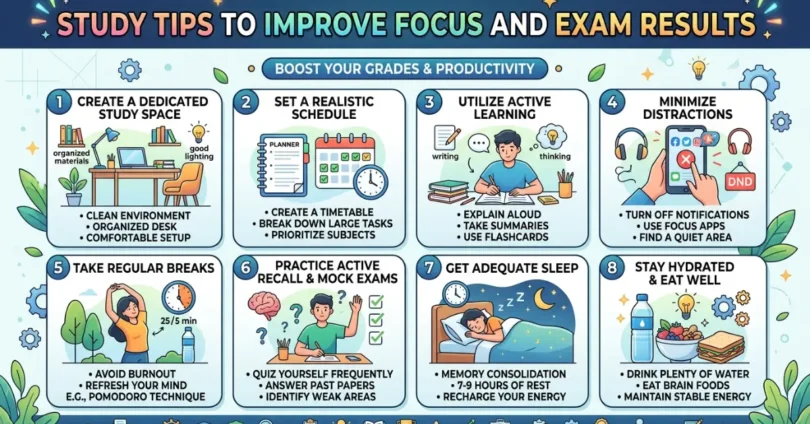
Study Tips to Improve Focus and Exam Results: Many students want good marks in exams, but they often struggle to stay focused while studying. They get distracted by mobile phones, noise, or even their own thoughts. This makes learning slow and difficult. The good news is that focus is a skill you can improve with simple study habits.
When you learn how to stay focused, you can understand lessons better and remember them for a longer time. In this article, you will learn easy and practical study tips that will help you improve your focus and get better exam results without feeling stressed.
Understand Your Study Goal
Before you start studying, it is very important to know your goal. A study goal means what you want to achieve in your learning. For example, your goal can be to finish one chapter, understand a topic, or get good marks in your exam. When you have a clear goal, your mind stays focused and you do not waste time.
There are two types of goals short-term and long-term. Short term goals are small tasks you complete daily, like learning one lesson. Long-term goals are bigger, like passing an exam with high marks. Both are important because small goals help you reach your big goal step by step.
Create a Daily Study Plan
A simple study plan helps you stay organized and use your time in a smart way.
- Decide how many hours you will study each day
- Choose the best time when your mind is fresh (morning or evening)
- Divide your subjects into small parts for each day
- Start with difficult subjects when your energy is high
- Keep easy topics for later to avoid stress
- Set short study sessions (30–60 minutes)
- Add short breaks between study time
- Make a checklist and mark tasks after completing them
- Keep your plan realistic so you can follow it daily
- Review your plan at the end of the day
A good daily study plan makes your study routine clear and helps you stay focused every day.
Choose a Quiet Study Environment
A calm and clean place helps your mind stay focused and learn better.
- Pick a quiet place where there is less noise
- Keep your study table clean and organized
- Turn off TV and avoid loud sounds
- Put your mobile phone on silent or keep it away
- Use good lighting so your eyes do not get tired
- Sit on a comfortable chair with a proper table
- Keep all your books and tools near you
- Ask family members not to disturb you during study time
- Avoid studying on bed to prevent sleepiness
- Use earplugs or soft background sound if needed
A quiet study environment helps you concentrate better and improves your study results.
Use Active Learning Methods
Active learning helps you understand and remember your lessons better.
- Read your topic carefully and try to understand it
- Write important points in your own words
- Highlight key ideas while studying
- Make short notes for quick revision
- Ask yourself questions about the topic
- Teach the topic to a friend or even yourself
- Use diagrams or charts to explain ideas
- Practice examples and solve questions
- Repeat important points again and again
- Connect new information with what you already know
Active learning makes study more interesting and helps you remember things for a long time.
Take Smart Breaks While Studying
Taking short breaks during study helps your mind stay fresh and active.
- Study for 30–50 minutes at a time
- Take a 5–10 minute short break after each session
- Stand up and stretch your body during breaks
- Drink water to stay fresh and focused
- Avoid using mobile phone during break time
- Take a short walk to refresh your mind
- Do light breathing or relaxation exercises
- Do not make breaks too long or you may lose focus
- Return to study with full attention after break
- Use a timer to manage study and break time
Smart breaks help your brain relax and improve your focus when you start studying again.
Improve Memory with Simple Tricks
Using easy memory tricks can help you remember lessons faster and for a longer time.
- Revise your lessons again and again
- Break big topics into small parts
- Use short notes for quick learning
- Make mind maps to connect ideas
- Read out loud to improve memory power
- Try to teach what you learned to someone else
- Use simple examples to understand difficult topics
- Highlight important points while studying
- Practice past questions regularly
- Repeat key points before sleeping
These simple tricks make your memory stronger and help you remember lessons easily in exams.
Stay Healthy for Better Focus
A healthy body helps your mind stay active and improves your ability to focus on studies.
- Get enough sleep (7–8 hours daily)
- Eat healthy food like fruits and vegetables
- Drink plenty of water to stay fresh
- Avoid junk food as it reduces energy
- Do light exercise or walking daily
- Take breaks to relax your mind
- Sit with a straight posture while studying
- Avoid studying when you feel very tired
- Spend some time in fresh air or sunlight
- Keep a balanced daily routine
A healthy lifestyle keeps your brain active and helps you focus better on your studies and exams.
Avoid Common Study Mistakes
Many students lose marks not because they don’t study, but because they make simple mistakes while studying.
- Do not study without a proper plan
- Avoid using mobile phone during study time
- Do not try to memorize everything at once
- Avoid last-minute cramming before exams
- Do not study in a noisy or distracting place
- Avoid long study sessions without breaks
- Do not skip revision of important topics
- Avoid copying notes without understanding
- Do not ignore difficult subjects
- Avoid studying when you are very tired or sleepy
Avoiding these common mistakes helps you study in a smarter way and improves your exam performance.
Practice and Test Yourself
Practicing regularly helps you check your understanding and improve your exam performance.
- Solve past exam papers regularly
- Take short self-tests after each topic
- Try to answer questions without looking at notes
- Practice writing answers within time limits
- Review your mistakes and learn from them
- Ask someone to quiz you on important topics
- Use sample papers for better preparation
- Repeat difficult questions again and again
- Track your progress after every test
- Focus more on weak areas during practice
Regular practice and self-testing build your confidence and help you perform better in exams.
Stay Positive and Motivated
A positive mindset helps you stay focused and makes studying easier and less stressful.
- Believe in yourself and your abilities
- Think positive even when studies feel hard
- Set small goals and celebrate your success
- Avoid comparing yourself with others
- Stay away from negative thoughts
- Take short breaks to refresh your mind
- Keep reminding yourself of your exam goals
- Surround yourself with supportive people
- Stay consistent with your study routine
- Learn from mistakes instead of getting upset
Staying positive and motivated helps you enjoy studying and achieve better exam results with confidence.
Common Faqs About Study Tips to Improve Focus and Exam Results
Some Faqs of Study Tips to Improve Focus and Exam Results:
How can I improve my focus while studying?
You can improve focus by studying in a quiet place, removing distractions, and following a fixed study schedule.
What is the best time to study for better results?
The best time is when your mind feels fresh, usually early morning or after a short rest.
How long should I study in one session?
You should study for 30 60 minutes per session to keep your mind active and avoid tiredness.
Why do I lose focus while studying?
Lack of planning, distractions, and tiredness are the main reasons for losing focus.
How can I avoid distraction from mobile phones?
Keep your phone on silent, turn off notifications, or place it in another room while studying.
How many breaks should I take while studying?
Take a short break after every study session to refresh your mind and improve concentration.
What should I do if I forget what I studied?
Regular revision and practicing what you learn can help you remember better.
How can I make studying more interesting?
You can make study interesting by using colors, charts, and asking yourself questions.
Does sleeping affect exam performance?
Yes, good sleep helps your brain stay fresh and improves memory and focus.
How can I stay confident before exams?
Stay confident by revising well, practicing past papers, and avoiding negative thinking.
Conclusion
Improving focus and getting better exam results is not difficult if you follow the right study habits. When you set clear goals, make a daily study plan, study in a quiet place, and use smart learning methods, your learning becomes easier and more effective. Taking breaks, staying healthy, avoiding mistakes, and practicing regularly also help you remember more and feel confident.
Most importantly, staying positive and consistent in your study routine can make a big difference in your success. With small daily efforts, every student can improve focus and achieve better results in exams.