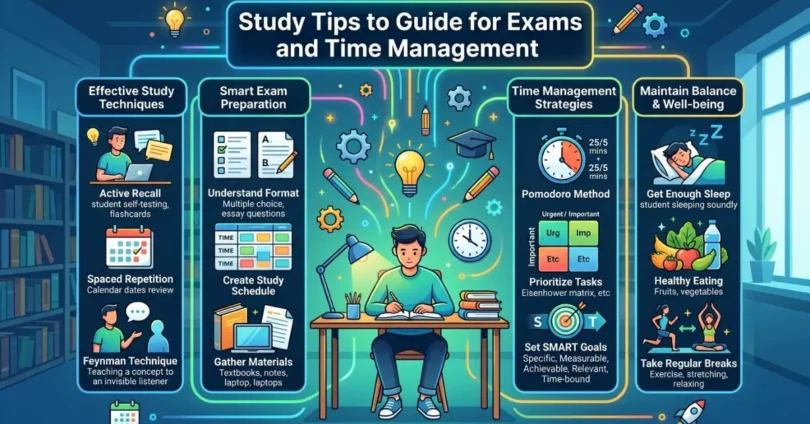
Study Tips to Guide for Exams and Time Management: Exams can feel hard and stressful, but with the right study tips and good time management, every student can do better. Many students fail not because they are weak, but because they do not have a clear plan. When you learn how to study in a smart way and use your time wisely, your learning becomes easy and fast.
This guide will help you understand simple and effective ways to prepare for exams step by step. It will also show you how to manage your time, stay focused, and feel confident
Understand Your Exam Goals
Before you start studying, it is very important to understand your exam goals. This means you should know what you want to achieve and what is expected in your exams. When your goals are clear, you can focus on the right topics and use your time in a better way. Check your syllabus, important chapters, and past papers to see what comes in the exam.
This will help you study smart instead of studying everything without a plan. You can also set small and simple goals like finishing one topic each day or improving a weak subject. Clear goals make your study easy, keep you motivated, and help you get better results.
Make a Simple Study Plan
A simple study plan helps you stay organized and use your time wisely.
- Make a daily and weekly study timetable
- Divide big subjects into small, easy parts
- Give more time to difficult subjects
- Set fixed study hours every day
- Add short breaks between study time
- Keep time for revision in your plan
- Do not overload your schedule
- Stay flexible if something changes
A simple and clear study plan makes learning easy and helps you stay on the right track.
Create a Good Study Space
A good study space helps you focus better and learn faster.
- Choose a quiet and peaceful place
- Keep your study table clean and organized
- Make sure there is good lighting
- Sit on a comfortable chair
- Keep all books and supplies nearby
- Turn off or silence your phone
- Avoid TV and other distractions
- Keep water or snacks if needed
A clean and calm study space makes it easier to stay focused and study without disturbance.
Use Smart Study Methods
Smart study methods help you learn faster and remember for a long time.
- Read and then write in your own words
- Make short notes for quick revision
- Use diagrams, charts, and mind maps
- Practice with past papers and questions
- Teach someone else what you learned
- Highlight important points in your book
- Study in short sessions instead of long hours
- Test yourself after completing a topic
Using smart methods makes your study more effective and helps you get better results.
Learn Time Management Basics
Time management means using your time in a smart and balanced way so you can study better without stress.
- Make a daily timetable and follow it
- Give equal time to all subjects
- Avoid wasting time on unnecessary activities
- Set priorities for important tasks first
- Use short breaks to stay fresh and active
- Do not delay your study work (avoid procrastination)
- Keep time for revision every day
- Balance study time with rest and sleep
Good time management helps you stay organized, reduce stress, and improve your exam performance.
Follow the Pomodoro Technique
The Pomodoro Technique is a simple method that helps you study with better focus and fewer distractions.
- Study for 25 minutes with full focus
- Take a short break of 5 minutes
- Repeat the cycle 3,4 times
- After 4 cycles, take a longer break (15,30 minutes)
- Avoid using phone during study time
- Keep a timer to track your sessions
- Use breaks to relax your mind
- Stay consistent with this routine daily
This technique helps you stay focused, reduce tiredness, and improve your study productivity.
Set Daily Study Targets
Daily study targets help you stay focused and complete your work on time.
- Set small and clear goals for each day
- Decide how many topics you will finish
- Break big chapters into smaller parts
- Write your targets in a notebook or planner
- Focus on completing one task at a time
- Check your progress at the end of the day
- Reward yourself after completing goals
- Adjust targets if needed for better balance
Setting daily targets makes your study more organized and helps you achieve success step by step.
Revise Regularly
Regular revision helps you remember what you have studied for a long time and improves exam performance.
- Revise your lessons every week
- Go through important notes daily
- Focus more on weak topics
- Practice past papers again and again
- Make short summary notes for quick revision
- Use flashcards or key points for memory
- Revise before sleeping for better recall
- Keep revision simple and consistent
Regular revision strengthens your memory and helps you feel more confident in exams.
Stay Healthy During Exams
Good health is very important during exams because it helps your mind stay active and focused.
- Get enough sleep every night
- Eat healthy and balanced food
- Drink plenty of water
- Avoid junk food and sugary drinks
- Take short breaks while studying
- Do light exercise or stretching daily
- Keep your mind relaxed and calm
- Avoid over-studying without rest
Staying healthy during exams helps you think better, stay active, and perform well in your studies.
Manage Exam Stress
Exam stress is normal, but managing it in a smart way helps you stay calm and perform better.
- Take deep breaths when feeling stressed
- Stay positive and believe in yourself
- Avoid overthinking about results
- Follow a proper study schedule
- Take short breaks to relax your mind
- Talk to friends or family for support
- Sleep well to keep your mind fresh
- Do not compare yourself with others
Managing exam stress helps you stay confident, focused, and do your best in exams.
Prepare for Exam Day
Being well-prepared for exam day helps you stay calm and confident in the exam hall.
- Pack your stationery and important items one day before
- Check your admit card or exam slip
- Sleep early and get enough rest
- Wake up on time without rushing
- Eat a light and healthy breakfast
- Reach the exam center early
- Read all instructions carefully before starting
- Stay calm and manage your time during the exam
Proper preparation for exam day helps you feel confident and perform your best without stress.
Common Faqs About Study Tips to Guide for Exams and Time Management
Some Faqs About Study Tips to Guide for Exams and Time Management:
How can I start preparing for exams effectively?
Start by understanding your syllabus and making a simple study plan. Focus on important topics first and study a little every day instead of leaving everything for the last time.
What is the best way to stay focused while studying?
Study in a quiet place, remove distractions like mobile phones, and use short study sessions with breaks to keep your mind fresh.
How many hours should I study daily for exams?
It depends on your schedule, but 4–6 focused hours with proper breaks are more effective than long, tired study sessions.
Why is revision important before exams?
Revision helps you remember what you have studied and improves your confidence during exams by strengthening your memory.
How can I improve my concentration during study time?
Set clear goals, avoid multitasking, and take short breaks after every study session to maintain focus.
What should I do if I feel exam pressure?
Stay calm, take deep breaths, follow your study plan, and avoid negative thinking. A positive mindset reduces stress.
How can I balance study and rest?
Follow a timetable that includes study time, short breaks, and proper sleep so your mind and body stay fresh.
Is group study helpful for exams?
Yes, group study can help if everyone stays focused and discusses topics seriously without wasting time.
How can I avoid last-minute exam preparation?
Start early, follow daily targets, and revise regularly so you don’t need to rush before exams.
What habits help in getting better exam results?
Consistency, discipline, regular revision, and smart study techniques help you achieve better results over time.
Conclusion
Good study habits and proper time management are the key to success in exams. When students follow a clear study plan, use smart learning methods, and manage their time wisely, they can reduce stress and improve their performance easily. Regular revision, healthy routines, and staying focused help build strong confidence for exams.
Remember, success does not come from hard work only, but from smart work and consistency. If you stay disciplined and follow these simple tips daily, you can achieve better results and make your exam preparation much easier and more effective.